Tuesday, 10 April 2018

Behind the Story of Kati-Ghati Gateway of Chanderi

Chanderi, a beautiful place of Madhya Pradesh which is filled with a lot of historical monuments, forts, Jain temples and many more structures that are important in view of history.Surrounded by mountains on three sides and the presence of River Betwa gives the looks of Chanderi a specific place to every visitors of the world.
Though very small place and no comfortable communication with other nearby location still visitors are going there to taste the eternal beauty of the place.
Out of many monuments, Kati Ghati Gateway is a center of attraction for many due to its structures which is situated on the southern edge of Chanderi. So many questions arise inside the mind once reach the location. Its simple a cut way path between a hill which stand still to tell the story of the past.
Kati Ghati gateway linked with erstwhile Bundelkhand on the North and Malwa on the South.The Gate itself is 80ft high and 39ft wide. Inscriptions engraved on the eastern wall of the gate in Devangiri and Nask scripts.It states that it was made in 1495AD by frantic Jiman Khan, the son of the Governor of Chanderi Sher Khan.
The horrific story behind the construction of this gate was very tragic.Jiman Khan ordered to build a gateway within a night to welcome the Sultan of Malwa Ghyasudin Khilji, who was to arrive in Chanderi the very next day.No Mason ready to take the risk of doing this work within a night. All were set back by the order of the royal farman. Later it was announced to present a heavy amount of gift who would be able to carve out the gate in one night. Out of many, only one mason assured Jiman Khan to furnish the task within a night and accepted the challenge.The next morning the work was accomplished by the team of the mason. Royal authority inspected the work and appreciated for their hard work but one lacking point came to limelight in front of all. No provision was made for door hinges.Because of crucial security point of view, the matter of door was quite essential for the Governor of Chanderi.Jiman Khan then refused to pay anything as per his previous promise to the mason for making this mistake. He walked away with empty handed. Losing all hopes from every corner he devasted completely and lost his faith on Royal Farman.Dejected and suffered from emotional setback by the higher authority he never requested again but committed suicide.Till today, the Kati Ghati stands without a door.
 The wall has the distinct cutting mark of the knives. It shows the difficulty of Mason's labor and his passion for completing the work before time.It seems His soul still roaming around the gate and trying to indicate the betray he got for his hard work.The tragic incident took place in the mind of the locals.Still,  the people of Chanderi feels the bitterness against Jiman Khan and present the story of Mason in a sympathetic way.The glory of the gate tells the story of past which enforce to think of the pain and perplexity of the Mason who lost his life with dissatisfaction.He is no more but he will remain in the heart of all who will visit there and give a .salute to his work.


Saturday, 17 March 2018

               INCREDIBLE VENKATGIRI SAREE

Venkatgiri, a small village of Nellore district of Andhra Pradesh with excellent skills, rich culture, and natures beauty. This is what my perception before tripping to Venkatgiri.I planned to go by local bus which would help me to enjoy the essence of local flavor with high quality regional authentic culture. Though the distance was mostly 36km  from Srikalahastiswar to Venkatgiri.It took 45 minutes to one hour journey. That short time permitted us to explore the beauty of nature on both the sides of the road.The green paddy fields and the farmer's undivided attention on their work at field made the picture more attractive for a visitor like me. Once I landed there my mysterious eyes searched for the location of weavers where I could find the looms.Though the local areas are not too large but very traditional shops are existed.While enquiring about the exact location of the shop from where I could collect Venkatgiri saree. I searched with the help of some locals. While passing through the main street bazaar I came across a big Havelli of the erstwhile royal dynasty.I stood there for a while to observe the architectural style of that palace.
                                                 
 During  1700 century, Velugoti Dynasty encouraged the weavers to weave saree for queens, royal women, and zamindars. Since then the weaving was the main attraction for everybody.The weaving village is known for its best skills and craftsmanship for producing one of the best kind of sarees in India.Venkatgiri sarees are mostly soft cotton and silk. Mostly all looms are pit looms. Villagers have followed traditionally their profession.The softness of the fabrics creates uniqueness from others.Cotton sarees are weaved in a Jamdani design.Recheria Rulers of Venkatgiri gave most credit for the progress of fine weaving. That tradition continued for a long then the present scenario compelled them to improve more to satiate the quest of modern customer.   


The inclination for shopping venkatgiri sarees was an impulsive force inside my mind so I got best option to search a  handloom wholesale shop so that it was easy for me to select the best one out of many.At last SRI BALAJI SAREE HOUSE derived my attention to went inside there and my further search began. Lots of collections of silk and varieties of cotton with wide ranges available there. I confused with an uncertain opinion.It took so many hours for final selections.
A beautiful small village exhibiting a charm that will leave you completely awe-inspired.I was lucky to have a glance of that so ethnicity and rustic view of the village. It was a compulsion for everybody who went there to collect silk sarees.The incredible handicrafts are undoubtedly contributed in the arena of  fashion world of culture which no other things will replace
.


Monday, 5 February 2018

Kalahasti To Kalamkari ...A Place To Explore All

Delighted to make a plan to travel towards Srikalahastiswar which is the 119km distance from  Chennai.It took 3 hours to reach there by TNSTC. More interest raised to think about the new place where I never went before that. Location is simple Telugu dominated area under the state of Andhra. Too difficult to communicate with the public.Once reached there near the temple of Srikalahastiswar the common scene was to face the broker who convinced with the pilgrims for the cheap availability of room near the temple. Beware of them. Search the hotel as per the requirement. So many options were there.Visit to temple for the darshan of  Lord Shiva is an essential part of every devotee. Temple open at 3am for the daily rituals of the God. One may take chance to have early darshan after booking ticket cost Rs 50. After 5am the crowds are too much due to free darshan for the public. The morning atmosphere within the premises of temple is very holiest.What I saw at my early morning visit to the campus of the temple were very amazing. So many people were busy to clean the floor and simultaneously few women busy to design rangoli in the different design with colorful chalk. The scent of many flowers which were carrying to offer garlands for God. The fragrance of turmeric and incense sticks make the areas the vibrating The devotional music around the temple and the recitation of Sanskrit shlokas by Brahmins make it so sacred for the devotee.The inside structure is awesome to think about its architectural style.As per the view of the historian, the initial structure of the temple was constructed by Pallava dynasty in the 5th century B.C.At 10 century, the Chola kings renovated the temple and constructed the main structure. It is believed that Sri kalahastiswar enshrines a Vayu linga, one of Shivas Pancha bhoota lingas.


 The main aim of all is to get the blessings of Lord Shiva. It is famous for Rahu-Ketu worship. Performing this puja will ward off the people from astrological effects of Rahu-Ketu.The Brahmins do follow all system to perform the puja of a number of devotees who gather there.It is a magnitude of this place for which many devotees throng here from the different part of India.
Another important thing was that mostly devotees pray to god with optimum silence without any loud sound. Offering coconut and flowers was an optional choice for everybody.The simple way of darshan of god at the sacred hall was the main rule of the temple where all were followed without any hesitation.
Besides that, so many other temples are there near the main temple.Patala Ganapati is there.Bhakta Kanappa Temple, Prassanna Varadraja Swamy Temple, Saharsa Linga Temple, Chaturmukheswar Temple are some of the notable places to visit at Kalahastiswara.The adjoining areas of temple premises are although very congested due to the development of construction of numbers of hotels and market.River Swarnamukhi, which is called as the Ganga of south-flowing just near the temple.One should wait for the sunrise and sunset time to watch the magical view.


No need to worry about food, south Indian menu are available mostly in all the nearby restaurants.Saravanan Hotel is very popular among all tourist. No one forgets to click few snaps near the huge Gopuram which Sri Krishnadevray built in 1516AD.

Though it takes only one day to roam around the temple city of Sri Kalahastiswar after that pilgrim moves towards Tirupati which is only 35 km from there.Frequent availability of transport near the gopuram is another facility that provides an opportunity to all for going towards Tirumala.

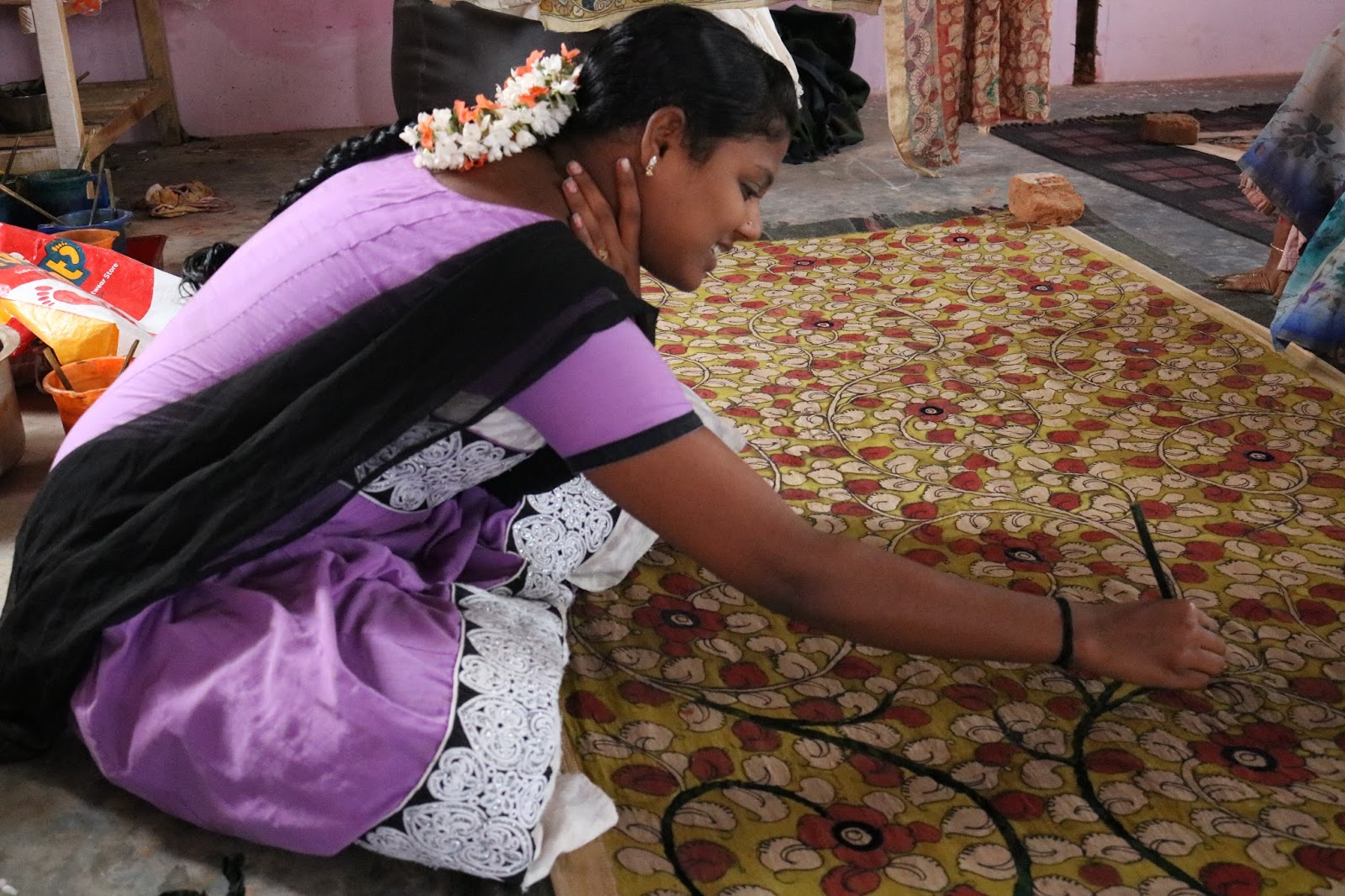
Next vision turned towards the Kalamkari handicraft work for which Srikalahasti is famous. I took one local traveler along with me in search of that work. First, we went to Bahadur peta Sahi where after a lot hard searching we reached a small house where few local craftswomen busy to draw the design on the cotton clothes. Kalamkari is an age-old tradition to do design on the subject of local folk and inspire from nature they do design about leaves and birds, and after designing they normally use vegetable dyes for coloring the designs on the clothes with the help of Pen.That's why it may be known as Kalamkari design.Under the patronage of the royal family, this handicrafts work reaches its peak but during social and industrial revolution gradually this Art lost its glory.After a long revival by many Artist and the initiative taken by local artist,the art got its patronage again at the fashion arena.


I did a little hard to visit other location in Kalahasti where I could explore more about the Kalamkari work and would shop few materials from them.As per the data that I carried with me I instructed to go to Bhanodaya Kalamkari, Sannidhi Street near Sukhabramasramam.Once I reached the doorstep of their workshop, it was amazing to watch the work directly. More than one artist did their work on the floor for designing and coloring on the clothes. After a little conversation with the owner of the workshop, i took interest to watch their work very closely.All the works on the materials were previously ordered by many designers as per the demand of the customers the kalamkari clothes were despatched to them. I did not get a single piece even after my request to her. One single piece required at least one week to design on it.They charged Rs 500 per one meter designing kalamkari clothes.


Again searching work continued where I would shop for myself. Time was less to spend on marketing. Still, i went to local market but failed to get what I expected to do for myself.Though Kalamkari work is originated there not much scope to get.a lump sum variety to procure for oneself.My experience in search of Kalamkari handicraft work gave me enough chance to learn a lot. Returned with a huge exposer with the public of a remote location of India where knowledge and Artwork have been blended with each other very sophisticatedly.

Wednesday, 24 January 2018

TRAVELLERS PARADISE

Possession of one kanjivaram silk saree is every women's dream, To get a genuine kanjivaram is a great task for every saree loving person. Its a  challenge for me whenever I visit Chennai. Blindly, I make a trip to Kanchipuram from Chennai for at least one day for getting silk sarees from there. The routine continued for many times. My hub for saree is from BM Silk center, Gandhi Road.

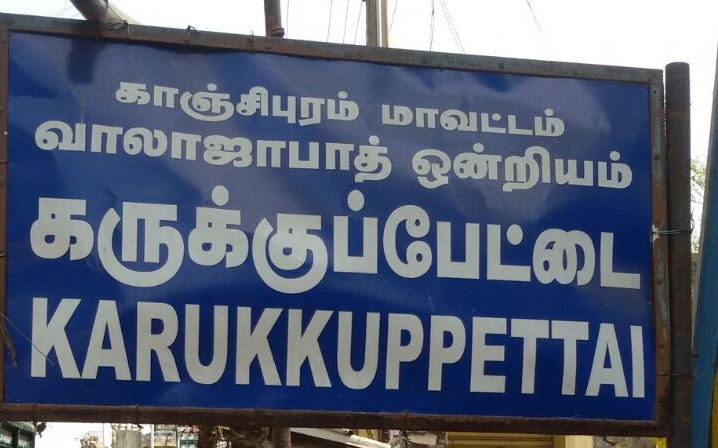
 Gradually, i decided to search more about it. The opportunity came when i went there again on Dec 2017. Without any more knowledge i began my travel from potheri station of Chennai to Kanchipuram . It was just early morning around 6am. Numbers of stations crossed . The scenic view somehow attracted my attention from the small window of the train. Without losing any more time my best option was to click the best scene through my camera. Due to little misty, natures beauty reflected at its best position. The chirping sound of birds made the situation more vibrating . Few more passengers waited inside the compartment of the train where they waited to go to their destination. Train was moving towards Tirumalpuri.Suddenly, one question arose inside my mind to inquire about the place where originally silk sarees are weaving. Though unacquainted with the Tamil language I questioned the weaver's village name which is nearby Kanchipuram.It took more time to coordinate with the local passenger. It was difficult for me to follow their language. At last i got what i wanted. Karkkuppettai and Ayyampet are the two villages where weavers are staying and they weave kanchipuram silk. My anxious mind flicked immediately for moving towards that village. I searched the convenient transport for reaching there. While roaming at the local bus depo i enquired from so many locals. No more information came from others regarding the accurate address.. While on the one side time was passing from my hand and no clue about what to do in that situation. With a lot of confusion i tried my level best to ask the right name of Bus which would help me to reach at that particular village.No matter how difficult it was. at last, I got the right bus to travel up to Karukkuppettai. That village is only 9km distance from Kanchipuram. It would be better to take any private taxi for that village. But, my option was to explore all in details with the help of locals. Without that, it could not be possible to go so the interior portion of the village. My travel again began by local bus towards  my destination.The amazing experience that i observed within a short span of time. Very clean surrounding and people were looking contented from their body attitude. Time came finally to reach at the areas where i wished to visit.Indication came from the sound of bus conductor.Consoled with the fact that at least with much difficult i reached at the place of Karukkuppettai.


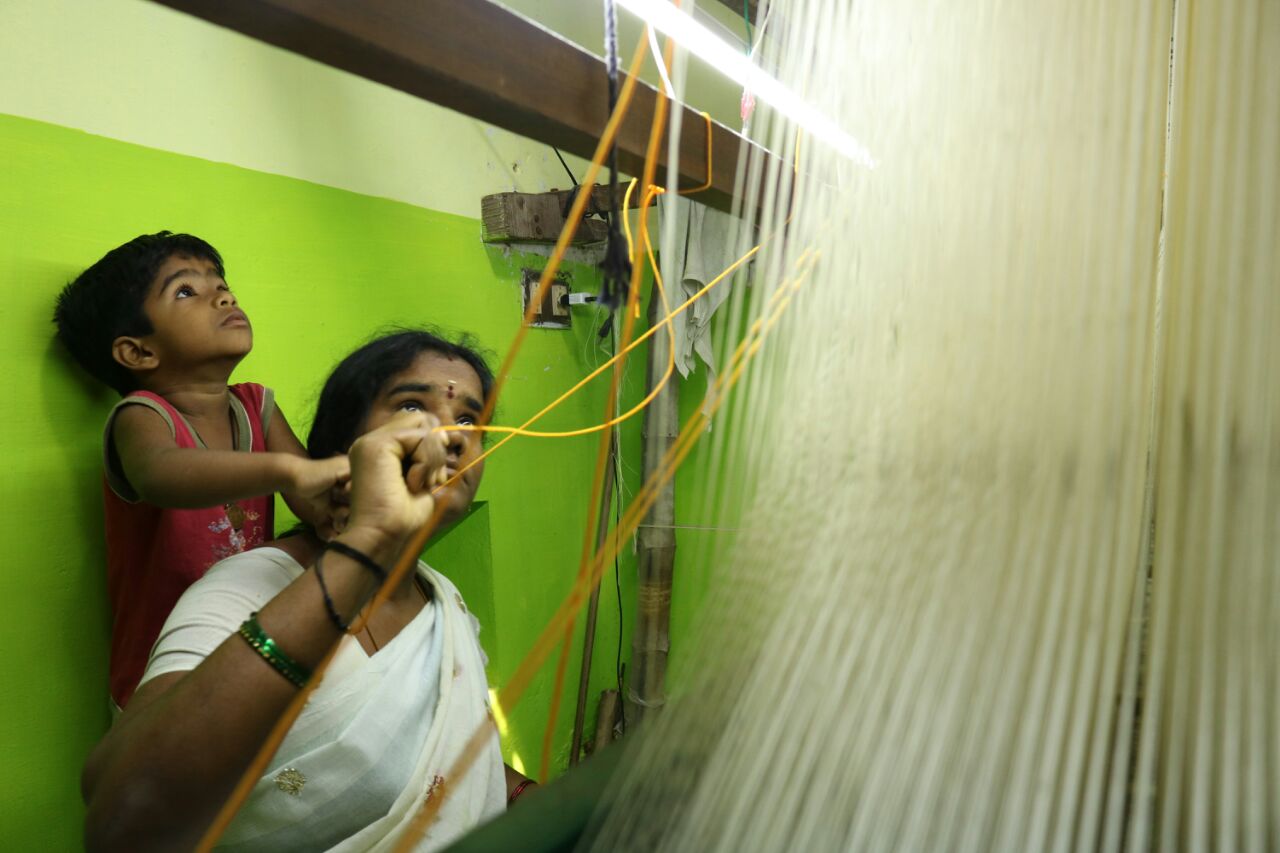
Now, next question raised in front of me where to go and in what direction. But to my surprise, the nearby shoppers helped me to find the right way. Still, it was difficult for a stranger traveler like me in search of a village where the kanjivaram sarees are weaving. But no signs of indication was there. So many confusion created immediately. Surprisingly while enquiring from one local shopper about the address of the weaver then an old lady came forward. She indicated with Tamil to follow her. Getting a ray of hope from her conversation I delighted to move towards the lane.So many thatched huts existed in one line.Traditionally, the front rows were decorated with rangoli which were looking very attractive for a visitors like me. Others were looking towards me in a strange way. So many questions they asked me the reason for my visit.I went a house of one room along with the owner of that house, she introduced her family members .closely the pictures of their living standard and their skills of making silk sarees came in front of me.Immediately Sitamma and her daughter in law and son made effort to show me how they had been doing hard for making at least 5 silk sarees in a week for which they all were bound to hand over their production to the broker.No direct linkage was there between the shopper and the weaver class. They all got raw materials through a mediator after the preparation of finished product they handed over their particulars to them. The story did not end here. Soon, they explained their life and their pathetic condition. I silently listened all in a helpless way


.Where one kanjivaram silk is available in thousands of rupees in a branded shop. while on the other side the makers are getting only Rs 500 per one silk saree. All profits are going in the pockets of the burgeoning class. We customers are not getting set back for purchasing more than one kanjeevaram from the renowned shop. Elite class never for a second think about the difficulty and the hardship of that particular community. Still, for a moment I lost my existence of my own and mingled with them simply to give them assurance that they were much more good in their life instead of so many difficulties because they had knowledge of crafts for which we Indians are feeling proud.My traveling to that remote village of Kanchipuram gave me immense knowledge regarding the lifestyle of weavers and the system of marketing about the kanjeevaram sarees .without losing more time I captured the smile of their face and their expectation in my camera.Returned back with a heavy heart for losing my paradise.

Sunday, 15 October 2017

Magic of Saree

Draping a saree is an age-old tradition for the women of Indian society. The exclusive beauty of sarees lies in its varieties of quality and design. At the initial stages, Royal patronage gave more scope for the weavers to make a specific design for their personal uses.Now the time has changed and present scenario creates a  dramatic wave for the love of saree to wear in every occasion.  I am no exception out of this boundary. Though, at my childhood, I was just keenly attentive towards my Bou who was draped a lot of sarees in the day to day affair.Gradually her influence impacted on my inner sense and later I habituated towards the collection of hand-woven silk sarees that have been available in different parts of India. Curiosity increased due to the intense love for saree and I traveled nook and corner of each state of India to get the knowledge of the history of each particular saree.Out of this Paithani Silk Saree has its own history to tell every saree lover.
Paithani silk saree first originated under the patronage of Satavahan Ruler at the time of 9th century.  Though not spread to other regions, the popularity of this saree began at the time of Mughal period.. Aurangzeb took much pain for developing this skill and placed numbers of skilled weavers at Maharastra.
Paithani is made from natural silk with precious gold and silver metal threads that gives Paithani the Midas touch.The weavers point to the special significance of living in harmony with nature and its elements
The bungee peacock motif in every sarees reprints a story of Saubhagya and that represent completeness of being women.Aswali, a motif of flowering vine in each saree credited to the Peshwa period.
Depending on design, details, and size, its take one or two years to weave a paithani saree.It holds its place as the most precious piece of heirloom that every woman possess.
Before traveling towards Western part of India, I searched a lot from different sources to get the knowledge of getting about the place where its possible to make in touch with weavers of Paithani saree. The opportunity came when I visited Shirdi. Attention moved towards a small village named Yeola just 32km distance from Shirdi. That city is situated at Nagar-Manmad road. Though not too difficult to reach there but the small village with narrow lanes of traditional houses attracts the attention of each tourist. More than one skilled weavers are ready to sell their products. Among all Soni Paithani of Yeola is much reputed for the quality and reasonable price tag of each selected saree. The proof of their popularity guaranteed by clicking so many photographs with famous Bollywood stars like Lata Mangeshkar to Dimple Kapadia.  All these were hanging in the entrance room of their shop.Losing no more time I purchased my most enthusiastic color and design of Paithani saree. Felt like a royal princess to have a piece of the royal emblem with me. Thanked skilled weavers who still maintained our tradition of cottage industry even though they are undergoing a lot of painful problems to save this age old tradition to make wonderful magic for Saree lover like me.

Saturday, 10 June 2017

AN UNIQUE EXPERIENCE.......

It was the time of afternoon of hot summer and too difficult to stand at the railway station of Baleswar for moving towards Baripada by local train.Hesitation immediately came to mind not to travel by local train for almost two hours of journey. The sweetening condition made us very horrible to wait for long. Anxious mind always waits to see the good result.The same thing happened to us. The consciousness of crowds around us made a signal for the arrival of the local train that came from Bhubaneswar.Everybody hurriedly went inside the coach to occupy a comfortable seat.It was a different scene to experience with a lot of rich cultural variation in the midst of local passengers.from vegetable vendors to tribal laborers along with middle-class family groups traveled with gaiety. At the outset, the train was running very smoothly as if it was moving towards a hill station. The looks of the train seem it was perhaps a toy -train navigating towards the thrilling scenic view.The mesmerizing beauty of fauna & flora made us speechless to believe ourselves that we were at local train which was moving towards a place like Baripada. Throughout the way, one could experience the beauty of dense greenery along with typical village life. While crossing towards the Baripada a lot of changes very clearly shown. Even though a lot of trees were there but termite nest was visible in every respectable place. It was a very exceptional scene in comparison to other places. In a recent survey, endangered animals of Baripada who ate termites were extinct very quickly.So, its a matter of problem for the coming time.While thinking about all the final destination came. yes, we reached the railway station of Baripada.It was one of the earliest railway stations in Odisha.The erstwhile ruler of Baripada, Shri Purna Chandra Bhanja Deo constructed Howrah-Chennai corridor at Baripada
One of the most beautiful cities of Mayurbhanja district is known as Baripada.It was established by Bhanja Dynasty at the 15th century.The ruins of the palatial palace at Haripur about 16 km distance from the south-east from Baripada proved that how the famous dynasty ruled at Baripada.More we entered into the city eagerness increased to know more about it. The royal palace of Bhanja dynasty has converted into an educational institution. Now named as the Maharaja Purnachandra college.The architecture style of Bhanja rulers was different.The present collectorate Building, MPC  college, Krishna Chandra High School and the Library Building all are a bright example of Bhanja Architecture.

MAHARAJA PURNACHANDRA COLLEGE
     LIBRARY BUILDING
Surprise to see the cleanness of the areas and the river which flows in the city is named as Budhabalang.While moving towards the market areas I saw a lot of big polythene bags were kept at the outset of the shop. To know more about it I enquired from the driver about that.Ohh, that's all puffed rice which is famous at Baripada.Yes, Mudhi-Mansha(combination of puffed rice and meat)is a local delicacy which can pamper the taste buds during the stay at Baripada.

Maa Ambika Mandir is one of the chief temple and highly revered deity in this region.Though it is in Bada-Bazar area I stubborn to visit there as soon as possible at the next early morning.
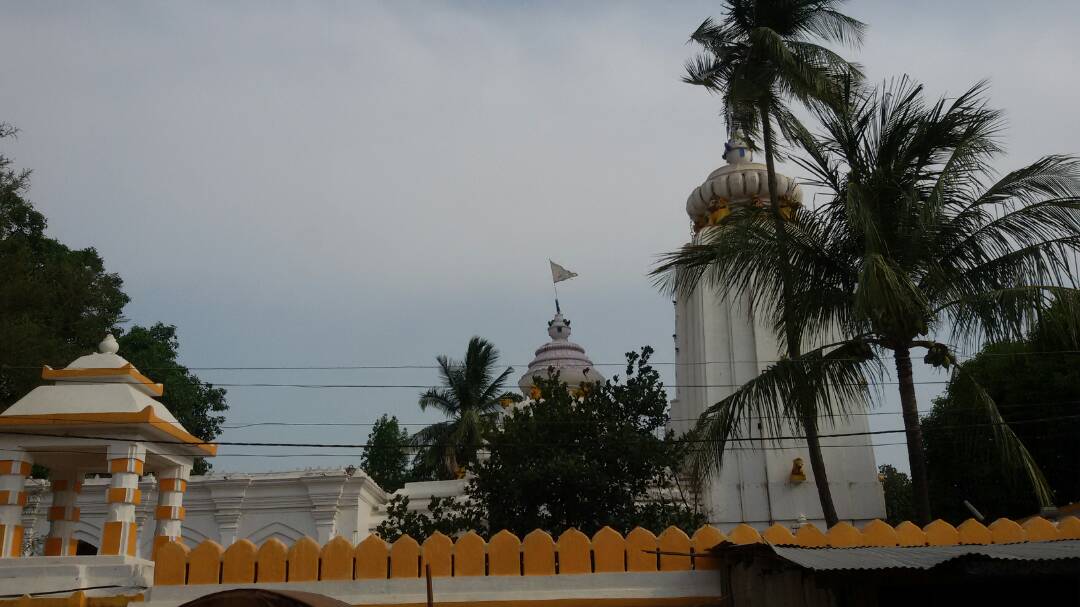
Jagganath temple of Baripada is considered very famous next to Puri temple. So, the justification was to go there as soon as possible, We went there but not so lucky to get darshan of the deity as it was afternoon time. But I observed from every corner to realize its beauty and the importance of the temple. The unique tradition of only women pulling the Ratha of Maa Shubhadra started at Baripada.


The simplicity attitude of the people and the beauty of the place was indeed a matter of attraction to enjoy it very honestly. I forgot to know more about Chau Dance of Baripada which is famous since long back.The simple village life along with the natural beauty create a strong bondage with the tourist which compel them to visit again and again.


The short staying time at Baripada provided us ample scope to enjoy all in a true sense.